
The system behind getting on top of your business.
Vision and good intentions aren't enough to keep a growing business aligned with what makes it valuable. It takes structure.
Here's the framework we build inside every partnership.
Most businesses don't lose their way all at once. They drift — one hire, one shortcut, one inconsistent customer interaction at a time.
By the time an owner notices, the fix feels enormous. We built the Organizational Learning System (OLS) and Organizational Management System (OMS) to solve that
problem structurally, not just culturally. Together, they give your business a repeatable way to develop people, protect what makes you unique, and keep the owner out of
the weeds — permanently, not just for a quarter.

THE ORGANIZATIONAL LEARNING SYSTEM (OLS)
The OLS is how your business develops people — deliberately, consistently, and at every level.
It's organized along two dimensions:
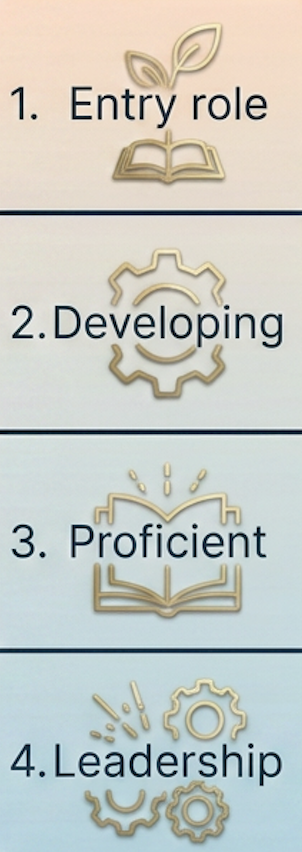
Levels
The organizational roles employees grow through. Every employee has a clear next step, and
every role has a clear standard. Growth stops being informal or dependent on who happens to
notice someone's potential.
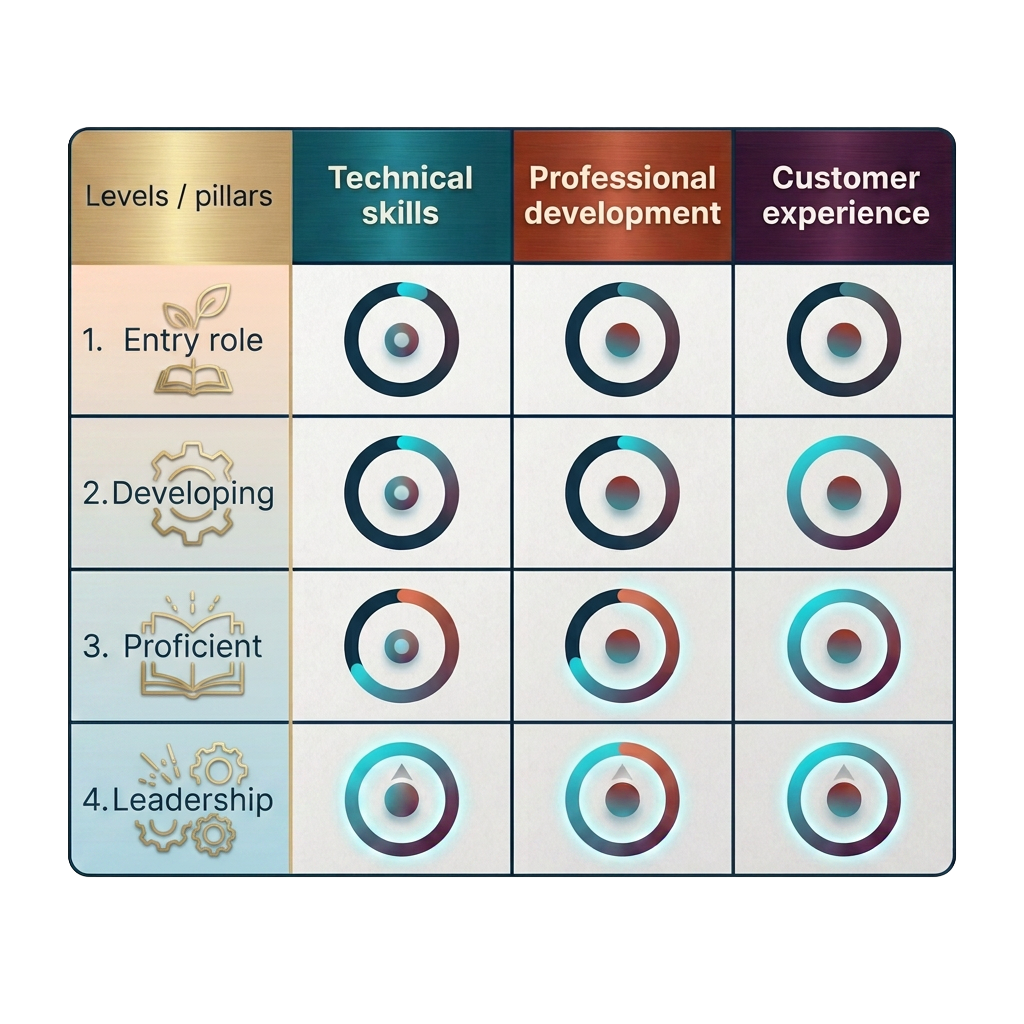
OLS Diagram
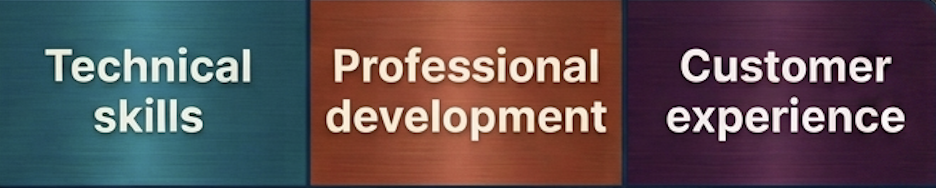
Pillars — the three areas of knowledge every role is built on:
1. Technical Role Information — the specific skills and know-how the role requires
2. Professional Development — leadership, mindset, and growth practices that build people,
not just employees
3. Customer Experience — how the role shows up for the people your business serves
Every Level is built across all three Pillars —
so as employees advance, they're not just getting
better at tasks. They're growing as professionals and becoming carriers of the experience that
makes your business what it is.
THE ORGANIZATIONAL MANAGEMENT SYSTEM (OMS)
If the OLS is what people learn, the OMS is what makes sure that learning actually shows up in how the business runs day to day.
The OMS is built around four connected structures:
• Professional Vision — tying each employee's growth to a vision they actually want for
themselves, not just a role the business needs filled
• Skill-Building Process — the practical mechanism for developing the technical and
professional capabilities defined in the OLS
• Customer Experience Standards — clear, consistent expectations for how your unique
value shows up in every interaction
• Role Expectations — defined accountability at every level, so performance is measured
against something real, not something implied
The OMS is what turns the OLS from a good idea into daily operating reality.
OMS Diagram

TWO SYSTEMS, ONE RESULT
The OLS defines what people need to know and how they grow. The OMS makes sure that growth
ties directly to how the business actually performs — for employees, for customers, and for you.
Together, they replace two things every growing business eventually runs into: inconsistent
execution, and an owner who has to personally hold the standard together. Once both systems are
in place, the standard holds itself.
Built for businesses ready to formalize what's been
The OLS and OMS work best for businesses that have already proven their value — typically 10 to
75 employees — and are now feeling the strain of scaling that value consistently. If that's where
you are, this is the system that gets you back on top.
Let's talk about what this could look like in your business.